Selasa, 12 Juli 2011

[O171.Ebook] Download PDF Solve for Happy: Engineer Your Path to Joy, by Mo Gawdat

Download PDF Solve for Happy: Engineer Your Path to Joy, by Mo Gawdat

Sooner you obtain guide Solve For Happy: Engineer Your Path To Joy, By Mo Gawdat, earlier you can delight in reviewing the book. It will be your count on keep downloading and install the e-book Solve For Happy: Engineer Your Path To Joy, By Mo Gawdat in given link. In this way, you could actually making a decision that is offered to obtain your personal e-book on-line. Below, be the first to get guide entitled Solve For Happy: Engineer Your Path To Joy, By Mo Gawdat and also be the initial to know just how the author indicates the message as well as understanding for you.
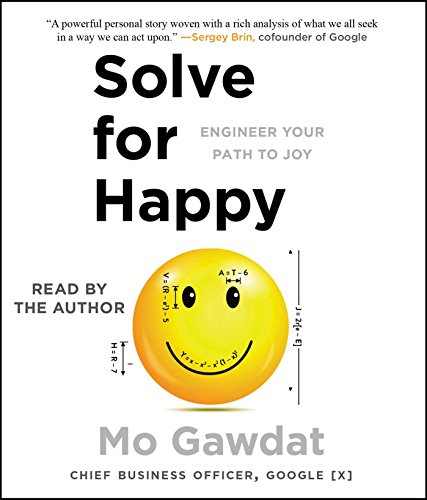
Solve for Happy: Engineer Your Path to Joy, by Mo Gawdat

Solve for Happy: Engineer Your Path to Joy, by Mo Gawdat


Solve for Happy: Engineer Your Path to Joy, by Mo Gawdat

Download PDF Solve for Happy: Engineer Your Path to Joy, by Mo Gawdat

Solve For Happy: Engineer Your Path To Joy, By Mo Gawdat. A job might obligate you to consistently improve the understanding and experience. When you have no adequate time to improve it directly, you could get the encounter and knowledge from reviewing the book. As everybody knows, book Solve For Happy: Engineer Your Path To Joy, By Mo Gawdat is incredibly popular as the window to open up the globe. It implies that reading publication Solve For Happy: Engineer Your Path To Joy, By Mo Gawdat will certainly offer you a new method to discover everything that you need. As guide that we will supply here, Solve For Happy: Engineer Your Path To Joy, By Mo Gawdat

Why need to be this e-book Solve For Happy: Engineer Your Path To Joy, By Mo Gawdat to read? You will never ever obtain the knowledge and experience without obtaining by on your own there or attempting by yourself to do it. Thus, reading this book Solve For Happy: Engineer Your Path To Joy, By Mo Gawdat is required. You can be fine as well as proper enough to obtain how crucial is reviewing this Solve For Happy: Engineer Your Path To Joy, By Mo Gawdat Also you always review by commitment, you can support on your own to have reading publication routine. It will certainly be so valuable and fun then.

But, exactly how is the way to obtain this book Solve For Happy: Engineer Your Path To Joy, By Mo Gawdat Still perplexed? It doesn't matter. You can appreciate reading this e-book Solve For Happy: Engineer Your Path To Joy, By Mo Gawdat by online or soft file. Just download guide Solve For Happy: Engineer Your Path To Joy, By Mo Gawdat in the link supplied to see. You will certainly obtain this Solve For Happy: Engineer Your Path To Joy, By Mo Gawdat by online. After downloading, you could save the soft data in your computer or gadget. So, it will certainly relieve you to review this book Solve For Happy: Engineer Your Path To Joy, By Mo Gawdat in particular time or location. It might be uncertain to delight in reading this book Solve For Happy: Engineer Your Path To Joy, By Mo Gawdat, considering that you have bunches of task. But, with this soft documents, you could take pleasure in reading in the extra time also in the spaces of your jobs in office.

Once again, checking out practice will certainly constantly give valuable perks for you. You may not have to spend lots of times to review guide Solve For Happy: Engineer Your Path To Joy, By Mo Gawdat Simply alloted numerous times in our spare or totally free times while having meal or in your office to read. This Solve For Happy: Engineer Your Path To Joy, By Mo Gawdat will show you brand-new point that you can do now. It will aid you to boost the high quality of your life. Occasion it is just an enjoyable publication Solve For Happy: Engineer Your Path To Joy, By Mo Gawdat, you could be healthier and also more fun to appreciate reading.

Solve for Happy: Engineer Your Path to Joy, by Mo Gawdat

Mo Gawdat is a remarkable thinker and the Chief Business Officer at Google’s [X], an elite team of engineers that comprise Google’s futuristic “dream factory.” Applying his superior skills of logic and problem solving to the issue of happiness, he proposes an algorithm based on an understanding of how the brain takes in and processes joy and sadness. Then he solves for happy.

In 2001 Mo Gawdat realized that despite his incredible success, he was desperately unhappy. A lifelong learner, he attacked the problem as an engineer would: examining all the provable facts and scrupulously applying logic. Eventually, his countless hours of research and science proved successful, and he discovered the equation for permanent happiness.

Thirteen years later, Mo’s algorithm would be put to the ultimate test. After the sudden death of his son, Ali, Mo and his family turned to his equation—and it saved them from despair. In dealing with the horrible loss, Mo found his mission: he would pull off the type of “moonshot” goal that he and his colleagues were always aiming for—he would share his equation with the world and help as many people as possible become happier.

In Solve for Happy Mo questions some of the most fundamental aspects of our existence, shares the underlying reasons for suffering, and plots out a step-by-step process for achieving lifelong happiness and enduring contentment. He shows us how to view life through a clear lens, teaching us how to dispel the illusions that cloud our thinking; overcome the brain’s blind spots; and embrace five ultimate truths.

No matter what obstacles we face, what burdens we bear, what trials we’ve experienced, we can all be content with our present situation and optimistic about the future.

  • Sales Rank: #111335 in Books
  • Published on: 2017-03-21
  • Released on: 2017-03-21
  • Formats: Audiobook, CD, Unabridged
  • Original language: English
  • Number of items: 9
  • Dimensions: 5.75" h x .90" w x 5.06" l,
  • Running time: 40333 seconds
  • Binding: Audio CD

Review
A powerful personal story woven with a rich analysis of what we all seek in a way we can act upon (Sergey Brin, co-founder of Google)

About the Author
Mo Gawdat is the Chief Business Officer at Google’s [X]. In the last ten years he has made happiness his primary topic of research, diving deeply into literature and conversing on the topic with thousands of people in more than a hundred countries. He is also a serial entrepreneur who has cofounded more than twenty businesses. He speaks Arabic, English, and German. In 2014, motivated by the tragic loss of his son, Ali, Mo began pouring his findings into his first book, Solve for Happy.

Mo Gawdat is the Chief Business Officer at Google’s [X]. In the last ten years he has made happiness his primary topic of research, diving deeply into literature and conversing on the topic with thousands of people in more than a hundred countries. He is also a serial entrepreneur who has cofounded more than twenty businesses. He speaks Arabic, English, and German. In 2014, motivated by the tragic loss of his son, Ali, Mo began pouring his findings into his first book, Solve for Happy.

Excerpt. � Reprinted by permission. All rights reserved.
Solve for Happy Chapter One Setting Up the Equation
It doesn’t matter if you’re rich or poor, tall or short, male or female, young or old. It doesn’t matter where you come from, what you do for a living, what language you speak, or what tragedies you’ve endured. Wherever you are, whoever you are, you want to be happy. It’s a human desire about as basic as the drive to take the next breath.

Happiness is that glorious feeling when everything seems right, when all of life’s twists and turns and jagged edges seem to fit together perfectly. In those often all-too-brief flickers of genuine happiness, every thought in your head is agreeable, and you wouldn’t mind if time stood still and the present moment extended forever.

Whatever we choose to do in life is ultimately an attempt to find this feeling and make it last. Some people look for it in romance, while others seek it in wealth or fame, and still others through some form of accomplishment. Yet we all know of people who are deeply loved, achieve great things, travel the world, snap up all the toys money can buy, indulge in every luxury, and still long for the elusive goal of satisfaction, contentment, and peace—also known as happiness.

Why should something so basic be so hard to find?

The truth is, it isn’t. We’re just looking for it in the wrong places.

We think of it as a destination to reach, when in fact it’s where we all began.

Have you ever searched for your keys only to realize they were in your pocket all along? Remember how you removed everything from your desk, searched beneath the couch, and got more and more frustrated the longer they went missing? We do the same thing when we struggle to find happiness “out there,” when, in fact, happiness is right where it’s always been: inside us, a basic design feature of our species.
Our Default State
Look at your computer, smartphone, or other gadgets. They all come with preferences preset by the designers and programmers. There’s a certain level of screen brightness, say, or a localized user interface language. A device fresh from the factory, set up the way its creators think best, is said to be in its “default state.”

For human beings, simply put, the default state is happiness.

If you don’t believe me, spend a little time with a human fresh from the factory, an infant or toddler. Obviously, there’s a lot of crying and fussing associated with the start-up phase of little humans, but the fact is, as long as their most basic needs are met—no immediate hunger, no immediate fear, no scary isolation, no physical pain or enduring sleeplessness—they live in the moment, perfectly happy. Even in distressed parts of the world, you can see children with dirty faces using little pebbles as toys or holding a cracked plastic plate as the steering wheel of an imaginary sports car. They may live in a hovel, but as long as they have food and a modicum of safety, you’ll see them run around hooting with joy. Even in news coverage of refugee camps, where thousands have been displaced by war or natural disaster, the adults in front of the camera will appear grim, but in the background you’ll still hear the sounds of kids laughing as they play soccer with a knot of rags for a ball.

But it’s not only kids. This default state applies to you too.

Look back into your own experience. Summon up a time when nothing annoyed you, nothing worried you, nothing upset you. You were happy, calm, and relaxed. The point is, you didn’t need a reason to be happy. You didn’t need your team to win the World Cup. You didn’t need a big promotion or a hot date or a yacht with a helicopter pad. All you needed was no reason to be unhappy. Which is another way of saying:

Happiness is the absence of unhappiness.

It’s our resting state when nothing clouds the picture or causes interference.

Happiness is your default state.

When you use a programmed device, you sometimes change its default settings without meaning to, sometimes so much so that certain functions become more difficult to use. You install an app that frequently connects to the Internet, and your battery life decreases. You download malware, and everything starts to go haywire. The same thing happens with the human default for happiness. Parental or societal pressure, belief systems, and unwarranted expectations come along and overwrite some of the original programming. The “you” who started out happily cooing in your crib, playing with your toes, gets caught up in a flurry of misconceptions and illusions. Happiness becomes a mysterious goal you seek but can’t quite grasp, rather than something simply there for you each morning when you open your eyes.


If we were to picture it, the times when you’re unhappy are like being buried under a pile of rocks made up of illusions, social pressures, and false beliefs. To reach happiness, you need to remove those rocks one by one, starting with some of your most fundamental beliefs.

As every person who’s ever called Tech Support knows, sometimes the first step to bringing a device back to proper functioning is to restore the factory settings. But unlike our gadgets, we humans don’t have a reset button. Instead, we have the ability to unlearn and reverse the effects of what went wrong along our path.


How did we ever get the idea that we have to look for happiness outside us, to strive for it, reach it, achieve it, or even earn it? How did we get things so terribly wrong that we’ve accepted that happiness touches our lives only briefly? How did we let go of our birthright to be happy?

The answer may surprise you: Perhaps that’s what we’ve always been trained to do.
Solve for Happy
You may have received sound advice like the kind my mother gave me, that I should study and work hard, save and be willing to defer certain forms of gratification to achieve certain goals. Her advice surely was a major contributor to my success. But I misunderstood. I thought she meant that I needed to defer happiness along the way. Or that happiness would be the result once I had achieved success.

Some of the happiest communities in the world are actually in the poorer countries of Latin America, where people do not seem to think much at all about financial security or what we consider success. They work each day to earn what they need. But beyond that, they prioritize their happiness and spend time with their family and friends.

I don’t mean to romanticize a life that appears quaint and colorful but still falls below the poverty line. But we can learn from a mind-set that weaves happiness into each day, regardless of economic conditions.

I have nothing against material success. Human advancement has always been driven by innate curiosity, but also by the perfectly reasonable desire to store up enough resources to survive winter or a drought or a bad harvest. Thousands of years ago the more territory your family or tribe controlled and the better your skills at hunting and gathering, the better were your chances of survival. Thus the idea of sitting idle under the mango tree lost ground to the idea of innovating and hustling a bit, expanding one’s territory, and building up a surplus, just in case.

As civilization developed, more territory and more wealth usually meant better living conditions and the prospect of a longer life. Eventually, capitalism came along, reinforced by the Protestant ethic, which made prosperity a sign of God’s favor. Individual effort and individual responsibility allowed the rise of what we now call income inequality, which increased the incentive to work even harder, if only to avoid being outpaced and crowded out by others. And once you’d risen, you certainly didn’t want to fall back. Because as the competition increased, the traditional supports that had provided security through the family or village eroded.

The era just before our own saw the Great Depression and two world wars in quick succession, during which even those at the top of the income ladder had to worry about the basics. As a result, hardship shaped the priorities of an entire generation, underscoring the idea that what mattered most in life was to never endure such hardships again. The “insurance policy” most widely adopted and passed along was called “success.”

Increasingly, as the twentieth century gave way to the twenty-first, the middle class raised their children to believe that the only logical course was to spend years in educational institutions to gain skills to be deployed in a lifetime of hard work in the hope of attaining security. We learned to make this path our priority, even if it made us unhappy, counting on the promise that when we finally achieved what society defined as success, then, at long last, we’d be happy.

Now, just ask yourself this question: How often do you actually see that happen? And instead, how often do you see a successful banker or business executive who’s swimming in money but seems to be miserable? How often do you hear about cases of suicide of those who seemingly “have it all”? Why do you think this happens? Because the basic premise is flawed: success, wealth, power, and fame don’t lead to happiness. As a matter of fact:

Success is not an essential prerequisite to happiness.

Ed Diener and Richard Easterlin’s work on the correlation of subjective well-being and income suggests that, in the United States, subjective well-being increases proportionately to income—but only up to a point. Yes, it feels lousy to have to work two jobs to be able to afford a tiny apartment and a beat-up Honda while paying off student loans. But once your income reaches the average annual income per capita, which in the United States today is about $70,000, subjective well-being plateaus. It’s true that earning less can dampen your sense of well-being, but earning more is not necessarily going to make you any happier.1 Which suggests that all the expensive things advertisers say are the keys to happiness—a better cell phone, a flashy car, a huge house, a status-worthy wardrobe—really aren’t so important.

Not only are wealth, power, and lots of toys not prerequisites for happiness; if anything, the chain of cause and effect actually works the other way. Andrew Oswald, Eugenio Proto, and Daniel Sgroi from the University of Warwick found that being happy made people roughly 12 percent more productive and, accordingly, more likely to get ahead.2 And so:

While success doesn’t lead to happiness, happiness does contribute to success.

And yet we continue to chase success as our primary goal. One of the earliest psychologists to focus attention on happy individuals and their psychological trajectory was Abraham Maslow. Back in 1933, he summed up our pursuit of success in one profound sentence: “The story of the human race is the story of men and women selling themselves short.”

While a reasonable level of success is common in our society, those who achieve the highest levels of success often have one thing in common, one thing that differentiates them from the pack. They all, almost compulsively, love what they do. Many successful athletes, musicians, and entrepreneurs have achieved their success because they love what they do so much they become experts at it just because the activity itself makes them happy. As Malcolm Gladwell puts it in Outliers, if you spend ten thousand hours doing something, you become one of the best in the world at it.3 And what’s the easiest way to spend so many hours on one thing? Doing something that makes you happy! Wouldn’t that be better than spending a lifetime trying to reach success in hopes that it will eventually lead to happiness? At work, in our personal life, relationships or love life, whatever it is that we do, we should directly:

Solve for Happy.
What Is Happiness?
At my lowest point, back in 2001, I realized that I would never restore the happiness that was my birthright if I didn’t at least know what I was looking for.

So, being an engineer, I set out to develop a simple process to collect the data I needed to determine what made me happy. First, though, I hesitated because the technique was so simple it seemed almost childish. But then it occurred to me: if our model for the default condition of human happiness is the infant or toddler, maybe “childish,” or at least “childlike,” is not such a bad thing.

I started by simply documenting every instance when I felt happy. I called it my Happy List. You might want to do the same thing. In fact, why not take a moment right now, pull out a pencil and a piece of paper, and jot down some of the things that make you happy. As assignments go, this one’s not too tough. The list can be nothing more than a string of short, declarative sentences that get right to the point and complete the phrase

“I feel happy when ______________.”

Don’t be shy. There’s no reason to feel inhibited because no one ever has to see your list. You can include the obvious stuff, like scratching your dog under her chin or watching a beautiful sunset, and simple things like talking to your friends or eating scrambled eggs. There are no wrong answers. Write as many as you can think of.

When you’re done, at least for the first pass, go back and highlight a few items that, if you were forced to set priorities, would be at the top of the list of things that make you happiest. Those will make for a valuable short list that will prove useful in our later discussions.

Here’s some good news already: the very act of creating your Happy List makes for a very happy experience, so much so that, when you’re finished, you should feel energetic and refreshed. I work on my list at least once a week, adding new things. Not only does it put a smile on my face, but it helps me cultivate something that psychologists say contributes to happiness over the long haul: an attitude of gratitude, which happens when you acknowledge the truth about our modern lives and the fact that there is plenty to be happy about after all.


So go ahead and enjoy. I’ll go make a cup of coffee and wait for you. (By the way, I feel happy when I enjoy a quiet cup of coffee!)
The Happiness Equation
My hunch is that your list consisted almost entirely of ordinary moments in life—a smile on your child’s face, the smell of warm coffee first thing in the morning, the kinds of things that happen every day.

So what’s the problem? If the triggers for happy moments are so ordinary and so accessible, why does “finding” happiness remain such a big challenge for so many people? And why, when we “find” it, does it so easily slip away?

When engineers are presented with a set of raw data, the first thing we do is to plot it and attempt to find a trend line. So let’s apply this to your Happy List and find the common pattern among the different instances of happiness on it. Can you see the trend?

The moments that make you happy may be very different from the moments that make me happy, but most lists will converge around this general proposition: Happiness happens when life seems to be going your way. You feel happy when life behaves the way you want it to.

Not surprisingly, the opposite is also true: Unhappiness happens when your reality does not match your hopes and expectations. When you expect sunshine on your wedding day, an unexpected rain represents a cosmic betrayal. Your unhappiness at that betrayal might linger forever, waiting to be relived anytime you feel blue or hostile toward your spouse. “I should have known! It rained on our wedding day!”

The simplest way for an engineer to express this definition of happiness is in an equation—the Happiness Equation.


Which means that if you perceive the events as equal to or greater than your expectations, you’re happy—or at least not unhappy.

But here’s the tricky bit: it’s not the event that make us unhappy; it’s the way we think about it that does.
Happiness in a Thought
There’s a simple test I use to reaffirm this concept. Call it the Blank Brain Test. It’s very simple. Recall a time when you felt unhappy, for example, I was unhappy when a friend was rude to me. Take your time and dwell on the thought, turning it over in your head and causing yourself as much unhappiness as you can. Let it linger in the same way we often do when we let thoughts like that ruin our day.

Please take a minute to find one such thought—and please accept my apology that I’m asking you to think about something that upsets you. Now apply the Blank Brain Test: Without changing anything in the real world, remove the thought—even if for just an instant. How can you do that? Engage your brain in another thought (read a few lines of text like you’re about to do here) or blast some music and sing along. Or try the Ironic Process Theory, in which you end up making yourself think about something by trying not to think about it.” Keep telling yourself, Don’t think about ice cream. Don’t think about ice cream.�.�.�. until you find yourself thinking of nothing but ice cream.

How do you feel now? For the brief moment that you stopped thinking about your friend’s rude behavior, were you upset? I thought not. Although nothing changed but your thought, there was a change in how you felt. Your friend still was rude, but you didn’t feel as bad anymore. Do you recognize what this means? Once the thought goes, the suffering disappears!

When a rude person offends you, he can’t really make you unhappy, unless you turn the event into a thought, then allow it to linger in your brain, and then allow it to distress you.

It’s the thought, not the actual event, that’s making you unhappy.

But thoughts are not always an accurate representation of the actual events. So a slight change in the way we think can have a drastic impact on our happiness. I know this because one of the happiest moments in my life was when my beautiful, classic Saab got totaled in a crash.

I loved that car. It was a 900 Turbo in British racing green with a beige soft top, and one day Nibal took it out and ended up in a head-on collision with a truck. My toy was gone, but I was deliriously happy because the airbags, seat belts, and all the other safety features Saab was known for had deployed exactly as planned, and Nibal walked out of the crash without a scratch. I lost my car, but so what? My beloved wife was spared!

Now consider this: if Nibal had parked the car somewhere and then it was smashed, I would have been devastated. The results would have been the same—wrecked car and safe Nibal—but my experience of it would have been very different. The event itself was irrelevant. It was the way I looked at it that mattered.

So here’s the $50 million question: If events remain as they are, but changing the way we think about them changes our experience of them, could we become happy simply by changing our thoughts?

Of course! This is what happens all the time already.

When a rude person apologizes, the apology doesn’t erase the event, but it does make you feel better, simply because the gesture changes the way you think about what happened. It brings the emotional world inside you and the world of events outside you into better alignment and balances out your Happiness Equation. You start to agree with the world. The way life is becomes more the way you want it to be, so you feel happy again—or at least no longer unhappy.

The same turnaround happens when you find out that the rude person didn’t mean what he said or that you misunderstood what he meant. Not a syllable of what was said has changed, but the way you think about it does, balancing the equation and leaving no reason to be unhappy.

There is ample evidence that we can actually manage our thoughts. We do that whenever asked to complete a specific assignment (such as what you are now doing by instructing your brain to read these lines of text). We tell our brain exactly what to do and it complies. Fully!
Pain versus Suffering
Just as our Happy List consists mostly of ordinary stuff, there are plenty of moments in ordinary, everyday life that are not to our liking. Even babies, our model for the happiness default, have plenty of things that can make them cranky: wet diapers, being left alone too long, being hungry, not getting enough sleep. Those moments of discomfort may be short-lived, but they serve a crucial, practical purpose. The discomfort of a wet diaper prompts the baby to cry, which prompts the mother or father or babysitter to change the diaper, which means that the problem gets solved before it causes a rash. As soon as the immediate discomfort goes away, the baby goes back to being happy.

In a similar fashion, most of the everyday discomforts of adult life are not only transient but also useful. The pangs of hunger prompt you to eat. The crankiness of inadequate sleep pushes you to get to bed. The prick of a thorn makes you pull back your finger, and the pain of a sprained ankle prompts you to give it a rest so it can heal. Even serious physical pain exists as an important form of messaging between our nervous system and our environment. Without pain to help us navigate dangers, we would inadvertently do all sorts of things to hurt ourselves, and we’d never have survived.

As much as we hate it, pain and the discomforts of life are useful!

But as it is, we hurt—we heal. You burn your finger, you put some ice on it, you’re good to go. Once the tissue starts to repair itself and the inflammation or irritation goes away, the pain has served its purpose. The brain no longer feels the need to protect the injured area, so it suppresses the signals, and good-bye pain. Which is why, barring a serious injury or a chronic condition, physical pain is generally not an impediment to happiness.

It may be less obvious, but everyday emotional pain is similar in that it also serves a survival function. Being left alone too long could be dangerous for a baby, so extended solitude becomes frightening to her and she cries to summon the caretaker. As adults, the painful feeling of isolation, also known as loneliness, signals that we may need to change our ways, to reach out more and try harder to engage. Painful feelings of anxiety can prompt us to seriously prepare for upcoming exams or presentations. Feelings of guilt or shame cause us to apologize and make amends, thereby restoring important social bonds.

When you experience emotional discomfort, you feel a little bruised for a few minutes, hours, or days, depending on the intensity of the experience. But once you stop thinking about it, the feeling of hurt goes away. Once time passes and memory fades, you can acknowledge and accept what you’ve experienced, extract whatever lesson you can from it, and move on. Once the pain is no longer needed, it naturally fades away.

But that’s not the case with suffering.

When we let it, emotional pain, even the most trivial kind, has the capacity to linger or resurface again and again, while our imaginations endlessly replay the reason for the pain. When we choose to let that happen, that’s when we overwrite our default for happiness and reset the preference for needless suffering.

The vividness of imagination also allows us to magnify the suffering, if we choose to, by adding our own simulated pain: “I’m an idiot for hurting my friend. I’m not good for anything. I deserve to be punished and suffer.” The incremental layer of internal dialogue only leads to deeper and longer suffering by brooding over the story until it makes us miserable. But make no mistake, the misery we feel then is not the product of the world around us—the event is already over while we continue to suffer. It’s the work of our own brains. In that sense:

We let our suffering linger as a form of self-generated pain.

All the thinking in the world, until converted into action, has no impact on the reality of our lives. It does not change the events in any way. The only impact it has is inside us, in the form of needless suffering and sadness. Anticipating awful things in the future or ruminating about awful moments from the past is not the useful, instructive, and unavoidable experience of everyday pain. This prolonged extension of pain is a serious bug in our system because:

Suffering offers no benefit whatsoever. None!

The interesting thing is, just as we have the ability to engage in our suffering at will, we also have the ability to debug our pain systems if we put our minds to it. But we don’t always make that choice.

Imagine that you need a root canal and the dentist offers you either (a) the standard procedure with a few days of recovery or (b) a root canal with additional bonus days of extensive excruciating pain. Why on earth would you ever choose (b)?

Sad to say, each and every day, millions of people do just that: they effectively go for the root canal with extras. It all begins when you accept the thought passing through your head as absolute truth. The longer you hold on to this thought, the more you prolong the pain.

The day my wonderful son left, everything went dark. I felt I had earned the right to suffer for the rest of my life, that I was given no choice but to close my door and decay. I was, in reality, given two choices: (a) I could choose to suffer for the rest of my life and it would not bring Ali back, or (b) I could choose to feel the pain but stop the miserable thoughts, do all that I could to honor his memory, and it would still not bring Ali back—though it would make the world just a little bit easier to endure. Two choices. Which would you choose?

I chose (b).

Please don’t get me wrong. I miss Ali every minute of every day. I miss his smile and comforting hug at the times when I need them most. This pain is very real, and I expect it to last. But I don’t resist it. I don’t have incessant suffering thoughts in my brain to magnify it. I don’t curse life and act like a victim. I don’t feel cheated. I don’t feel hatred or anger toward the hospital or the doctor, and I don’t blame myself for driving him there. Such thoughts would serve no purpose. I choose not to suffer. It helps me put life in perspective and move positively forward, sending Ali my loving wishes and keeping a happy memory of him alive.

Would you make that choice in the face of tough times? Assuming you could and that it’s possible, would you make the choice to stop your own suffering? I realize that you might have endured unbearable hardship in your life, the pain of loss, illness, or lack. But please don’t let those thoughts convince you that you’re supposed to suffer, that you don’t deserve to be happy.

Happiness starts with a conscious choice.

Life doesn’t play tricks; it’s just hard sometimes. But even then we’re always given two choices: either do the best we can, take the pain, and drop the suffering, or suffer. Either way, life will still be hard.

Keep that in mind. You know what to do. Now I’ll show you how to do it.

Most helpful customer reviews

32 of 34 people found the following review helpful.
Game-changer, I'm about to read it again!
By Maya Li
If you're reading this review, the book has already found you. This Mo guy is not your typical self-help author (not that I have anything against them, I'm one of those hippie-nerdy types who has an entire bookshelf dedicated to books on happiness :). He's probably the last person you'd expect to write a book like this (a Silicon Valley high tech executive) but I think that's part of what sets it apart -- it's a very carefully compiled set of insights with one goal only -- your happiness.

I challenge you to read this book and *not* end up questioning some of your most deeply held beliefs -- in the most wonderful, enlightening, and life-freeing way. Just flip to any chapter and prepare to have your mind delightfully blown-- there's so many surprising topics you wouldn't expect to find within one cover. I can't wait until this book gets into the hands, minds and hearts of millions because it will truly spark a revolution within our collective consciousness, irreversibly raising our capacity to enjoy life as it's meant to be lived. I'm so grateful for Mo's dedication to sharing his many years of personal research and the equation that has passed the ultimate test of any human being's resilience... truly a gift that I have already begun to share with everyone I can.

10 of 11 people found the following review helpful.
... about how we approach our expectations for life and happiness. The author draws on deeply personal experiences
By Paula Weyler Beck
A refreshing and practical way to think about how we approach our expectations for life and happiness. The author draws on deeply personal experiences, mathematics, physics, and more to help readers understand their own simple "formula" for happy- and to recognize the areas where we get the variables wrong at times. This book will resonate with analytical business or engineering minds, as well as creative or spiritual types. Highly recommend!

10 of 11 people found the following review helpful.
Profoundly changed my perspective on several aspects of life
By Tarek
To be honest, I initially thought the idea of an engineering approach to happiness was a completely ridiculous one, and mostly read the book out of pure curiosity. To my shock, I couldn't put it down for 3 days! The book has profoundly changed my perspective on several aspects of life, essentially making me a much happier person. Definitely works.

See all 33 customer reviews...

Solve for Happy: Engineer Your Path to Joy, by Mo Gawdat PDF
Solve for Happy: Engineer Your Path to Joy, by Mo Gawdat EPub
Solve for Happy: Engineer Your Path to Joy, by Mo Gawdat Doc
Solve for Happy: Engineer Your Path to Joy, by Mo Gawdat iBooks
Solve for Happy: Engineer Your Path to Joy, by Mo Gawdat rtf
Solve for Happy: Engineer Your Path to Joy, by Mo Gawdat Mobipocket
Solve for Happy: Engineer Your Path to Joy, by Mo Gawdat Kindle

Solve for Happy: Engineer Your Path to Joy, by Mo Gawdat PDF

Solve for Happy: Engineer Your Path to Joy, by Mo Gawdat PDF

Solve for Happy: Engineer Your Path to Joy, by Mo Gawdat PDF

Sabtu, 09 Juli 2011

[Z393.Ebook] Free Ebook Health Care Economics (DELMAR SERIES IN HEALTH SERVICES ADMINISTRATION), by Paul J. Feldstein

Free Ebook Health Care Economics (DELMAR SERIES IN HEALTH SERVICES ADMINISTRATION), by Paul J. Feldstein

Discover a lot more experiences as well as knowledge by checking out guide qualified Health Care Economics (DELMAR SERIES IN HEALTH SERVICES ADMINISTRATION), By Paul J. Feldstein This is an e-book that you are looking for, isn't really it? That's right. You have actually come to the right website, then. We always provide you Health Care Economics (DELMAR SERIES IN HEALTH SERVICES ADMINISTRATION), By Paul J. Feldstein and also the most preferred e-books in the globe to download and appreciated reading. You may not disregard that visiting this collection is a purpose and even by accidental.

Health Care Economics (DELMAR SERIES IN HEALTH SERVICES ADMINISTRATION), by Paul J. Feldstein

Health Care Economics (DELMAR SERIES IN HEALTH SERVICES ADMINISTRATION), by Paul J. Feldstein


Health Care Economics (DELMAR SERIES IN HEALTH SERVICES ADMINISTRATION), by Paul J. Feldstein

Free Ebook Health Care Economics (DELMAR SERIES IN HEALTH SERVICES ADMINISTRATION), by Paul J. Feldstein

Idea in choosing the most effective book Health Care Economics (DELMAR SERIES IN HEALTH SERVICES ADMINISTRATION), By Paul J. Feldstein to read this day can be gotten by reading this resource. You could discover the most effective book Health Care Economics (DELMAR SERIES IN HEALTH SERVICES ADMINISTRATION), By Paul J. Feldstein that is offered in this world. Not just had actually guides released from this nation, but likewise the various other nations. And now, we suppose you to check out Health Care Economics (DELMAR SERIES IN HEALTH SERVICES ADMINISTRATION), By Paul J. Feldstein as one of the reading products. This is only one of the best books to accumulate in this site. Look at the resource as well as look guides Health Care Economics (DELMAR SERIES IN HEALTH SERVICES ADMINISTRATION), By Paul J. Feldstein You could discover great deals of titles of guides offered.

This letter may not influence you to be smarter, yet guide Health Care Economics (DELMAR SERIES IN HEALTH SERVICES ADMINISTRATION), By Paul J. Feldstein that our company offer will stimulate you to be smarter. Yeah, a minimum of you'll understand greater than others who do not. This is what called as the quality life improvisation. Why should this Health Care Economics (DELMAR SERIES IN HEALTH SERVICES ADMINISTRATION), By Paul J. Feldstein It's because this is your favourite style to review. If you such as this Health Care Economics (DELMAR SERIES IN HEALTH SERVICES ADMINISTRATION), By Paul J. Feldstein style around, why do not you read the book Health Care Economics (DELMAR SERIES IN HEALTH SERVICES ADMINISTRATION), By Paul J. Feldstein to improve your conversation?

Today book Health Care Economics (DELMAR SERIES IN HEALTH SERVICES ADMINISTRATION), By Paul J. Feldstein we provide here is not sort of usual book. You understand, checking out currently doesn't mean to manage the printed book Health Care Economics (DELMAR SERIES IN HEALTH SERVICES ADMINISTRATION), By Paul J. Feldstein in your hand. You could get the soft data of Health Care Economics (DELMAR SERIES IN HEALTH SERVICES ADMINISTRATION), By Paul J. Feldstein in your gizmo. Well, we mean that guide that we proffer is the soft file of the book Health Care Economics (DELMAR SERIES IN HEALTH SERVICES ADMINISTRATION), By Paul J. Feldstein The content and all points are exact same. The distinction is just the types of guide Health Care Economics (DELMAR SERIES IN HEALTH SERVICES ADMINISTRATION), By Paul J. Feldstein, whereas, this problem will exactly pay.

We share you additionally the way to get this book Health Care Economics (DELMAR SERIES IN HEALTH SERVICES ADMINISTRATION), By Paul J. Feldstein without visiting guide establishment. You could remain to check out the link that we provide and also ready to download and install Health Care Economics (DELMAR SERIES IN HEALTH SERVICES ADMINISTRATION), By Paul J. Feldstein When many individuals are hectic to seek fro in guide shop, you are extremely simple to download the Health Care Economics (DELMAR SERIES IN HEALTH SERVICES ADMINISTRATION), By Paul J. Feldstein right here. So, what else you will go with? Take the motivation here! It is not just offering the ideal book Health Care Economics (DELMAR SERIES IN HEALTH SERVICES ADMINISTRATION), By Paul J. Feldstein yet likewise the appropriate book collections. Here we always offer you the best and easiest way.

Health Care Economics (DELMAR SERIES IN HEALTH SERVICES ADMINISTRATION), by Paul J. Feldstein

Delivering the most detailed and exhaustive content available, market-leading HEALTH CARE ECONOMICS, 7th Edition demonstrates how basic economic concepts, principles, and theories can be used to think about and illustrate various health care issues. This introductory economics text is geared toward graduate students who will be medical and health services managers, administrators, or executives. The seventh edition of HEALTH CARE ECONOMICS includes recent data on the medical sector, updated figures and tables, the latest information on legislative changes affecting this industry, and new literature and research. It also provides an insightful historical perspective within which these changes are occurring.

  • Sales Rank: #74428 in Books
  • Published on: 2011-06-06
  • Original language: English
  • Number of items: 1
  • Dimensions: 9.42" h x 1.15" w x 7.97" l, 2.54 pounds
  • Binding: Hardcover
  • 608 pages

Review
Preface. Detailed Contents. List of Figures. List of Tables. 1. An Introduction to the Economics of Medical Care. Appendix: Review of Demand, Supply, Equilibrium Price, Price Elasticity, and Competitive and Monopoly Analysis. 2. The Role of Government in Health and Medical Care. 3. Health Policy and the Legislative Marketplace. 4. The Production of Health: The Impact of Medical Services on Health. Appendix: Cost-Benefit, Cost-Effectiveness, and Cost-Utility Analyses. 5. An Overview of the Medical Care Sector. 6. The Demand for Medical Care. Appendix: The Effect of Coinsurance on the Demand for Medical Care. 7. The Demand for Health Insurance. Appendix 1: Risk Neutral and Risk Seeking Behavior. Appendix 2: The Effect on the Insurance Premium of Extending Coverage to Include Additional Benefits. 8. The Supply of Medical Care: An Overview. 9. Market Competition in Medical Care. 10. The Market for Health Insurance: Its Performance and Structure. Appendix 1: The Use of Medical Loss Ratios as a Measure of Health Plan Performance. Appendix 2: Developing Risk-Adjusted Premiums. 11. The Physician Services Market. Appendix: How Medicare Pays Physicians. 12. The Market for Hospital Services. Appendix 1: Using a Physician Control Model to Increase Physician Productivity. Appendix 2: Cost Shifting. 13. The Pharmaceutical Industry. 14. Health Manpower Shortages and Surpluses: Definitions, Measurement, and Policies. 15. The Market for Physician Manpower. 16. The Market for Medical Education: Equity and Efficiency. 17. The Market for Registered Nurses. Appendix: Market Structure and Nurse Wages and Employment. 18. National Health Insurance: An Approach to the Redistribution of Medical Care. 19. Concluding Comments on the Economics of Medical Care. Appendix: Measuring Changes in the Price of Medical Care. Appendix: Health Insurance Premiums as a Measure of the Price of Medical Care. Glossary.

About the Author
Paul J. Feldstein is Professor and Robert Gumbiner Chair in Health Care Management at the Paul Merage School of Business, University of California, Irvine, a position he has held since 1987. He previously served at the University of Michigan as Professor in both the Department of Economics and the School of Public Health. Before that, he was Director of the Division of Research at the American Hospital Association. Professor Feldstein has written more 70 articles on health care as well as seven books, including Health Policy Issues: An Economic Perspective on Health Reform, 5e (2011) and The Politics of Health Legislation: An Economic Perspective, 3e (2006). During several leaves from the University, Professor Feldstein worked at the Office of Management and Budget, Social Security Administration, and the World Health Organization. He has served as a consultant to many government and private health agencies, an expert witness on health anti-trust issues--including the case of the FTC v. The AMA, which was decided by the U.S. Supreme Court--and as a member of the boards of directors of several health care firms. Professor Feldstein received his Ph.D. from the University of Chicago.

Most helpful customer reviews

8 of 10 people found the following review helpful.
Review of Health Care Economics
By Jennifer Stackle
I found the book to be very good. Throughout it emphasizes an economic approach to what is occurring in health care and, what I particularly like, is the author's use of economic figures to illustrate the economic theory. The book covers a lot of health care topics and it's well written. I recommend it. The other students in the class also liked the book.

3 of 3 people found the following review helpful.
Masters Text Book
By Clifford
Good book for re-learning. Very understandable and easy to follow. Would recommend to any professor want to find a good text for their students.

10 of 14 people found the following review helpful.
Left liberal screed on health care politics, not instruction on health care economics
By Dr.
I bought this book to learn about the financial and economic sides of the health care industry. What I've gotten instead is a leftist screed advocating redistribution, totally critical of physicians, dentists, hospitals, and health care organizations, and devoid of any appreciation for market economics. Here is a quote:

"Government policy should be concerned with achieving two objectives: improving market efficiency and, based on society's values, the redistribution of resources or services." p.10.

Is "redistribution" really what government should be doing? What about promoting medical research, increasing the number of providers, improving health habits of the population, and allowing private insurers to compete on price and products without smothering government restrictions?

Each time I try to ignore his politics and read on in Feldstein's book to learn something about health care economics I run into crtiques of the AMA, the American Hospital Association, nurses' unions, medical schools, and pharmaceutical companies.

So if you want a left liberal critique of modern American medicine with no objective balance, buy this book. But if you want to learn about health care economics or get at least a fair picture of health care politics, don't waste your time.

Henry Lerner, M.D.
Assistant Clincial Professor of Obstetrics and Gynecology
Harvard Medical School

See all 12 customer reviews...

Health Care Economics (DELMAR SERIES IN HEALTH SERVICES ADMINISTRATION), by Paul J. Feldstein PDF
Health Care Economics (DELMAR SERIES IN HEALTH SERVICES ADMINISTRATION), by Paul J. Feldstein EPub
Health Care Economics (DELMAR SERIES IN HEALTH SERVICES ADMINISTRATION), by Paul J. Feldstein Doc
Health Care Economics (DELMAR SERIES IN HEALTH SERVICES ADMINISTRATION), by Paul J. Feldstein iBooks
Health Care Economics (DELMAR SERIES IN HEALTH SERVICES ADMINISTRATION), by Paul J. Feldstein rtf
Health Care Economics (DELMAR SERIES IN HEALTH SERVICES ADMINISTRATION), by Paul J. Feldstein Mobipocket
Health Care Economics (DELMAR SERIES IN HEALTH SERVICES ADMINISTRATION), by Paul J. Feldstein Kindle

Health Care Economics (DELMAR SERIES IN HEALTH SERVICES ADMINISTRATION), by Paul J. Feldstein PDF

Health Care Economics (DELMAR SERIES IN HEALTH SERVICES ADMINISTRATION), by Paul J. Feldstein PDF

Health Care Economics (DELMAR SERIES IN HEALTH SERVICES ADMINISTRATION), by Paul J. Feldstein PDF

Jumat, 08 Juli 2011

[V738.Ebook] PDF Ebook Windows Nt 4 Programming from the Ground Up, by Herbert Schildt

PDF Ebook Windows Nt 4 Programming from the Ground Up, by Herbert Schildt

Thus, this internet site offers for you to cover your issue. We reveal you some referred books Windows Nt 4 Programming From The Ground Up, By Herbert Schildt in all kinds and also styles. From usual author to the well-known one, they are all covered to give in this internet site. This Windows Nt 4 Programming From The Ground Up, By Herbert Schildt is you're hunted for book; you just need to visit the link web page to display in this web site then opt for downloading and install. It will not take many times to obtain one publication Windows Nt 4 Programming From The Ground Up, By Herbert Schildt It will depend upon your web link. Just acquisition and download and install the soft data of this book Windows Nt 4 Programming From The Ground Up, By Herbert Schildt

Windows Nt 4 Programming from the Ground Up, by Herbert Schildt

Windows Nt 4 Programming from the Ground Up, by Herbert Schildt


Windows Nt 4 Programming from the Ground Up, by Herbert Schildt

PDF Ebook Windows Nt 4 Programming from the Ground Up, by Herbert Schildt

Do you think that reading is an important task? Find your reasons adding is very important. Reviewing a book Windows Nt 4 Programming From The Ground Up, By Herbert Schildt is one component of enjoyable activities that will make your life high quality a lot better. It is not about just just what type of e-book Windows Nt 4 Programming From The Ground Up, By Herbert Schildt you read, it is not just about just how several books you check out, it has to do with the habit. Reviewing behavior will be a way to make publication Windows Nt 4 Programming From The Ground Up, By Herbert Schildt as her or his close friend. It will certainly no issue if they spend money and invest more e-books to finish reading, so does this book Windows Nt 4 Programming From The Ground Up, By Herbert Schildt

Reviewing habit will certainly consistently lead individuals not to pleased reading Windows Nt 4 Programming From The Ground Up, By Herbert Schildt, a book, 10 e-book, hundreds books, and more. One that will make them really feel satisfied is finishing reviewing this book Windows Nt 4 Programming From The Ground Up, By Herbert Schildt and getting the message of guides, after that discovering the other next e-book to review. It continues an increasing number of. The moment to complete reviewing a publication Windows Nt 4 Programming From The Ground Up, By Herbert Schildt will certainly be always numerous relying on spar time to spend; one example is this Windows Nt 4 Programming From The Ground Up, By Herbert Schildt

Now, exactly how do you know where to buy this e-book Windows Nt 4 Programming From The Ground Up, By Herbert Schildt Never ever mind, now you could not visit guide shop under the intense sun or night to browse the publication Windows Nt 4 Programming From The Ground Up, By Herbert Schildt We here consistently help you to locate hundreds type of book. One of them is this publication entitled Windows Nt 4 Programming From The Ground Up, By Herbert Schildt You may go to the web link page offered in this collection then go with downloading and install. It will certainly not take more times. Just attach to your internet gain access to and you can access the e-book Windows Nt 4 Programming From The Ground Up, By Herbert Schildt online. Certainly, after downloading Windows Nt 4 Programming From The Ground Up, By Herbert Schildt, you might not print it.

You can save the soft file of this e-book Windows Nt 4 Programming From The Ground Up, By Herbert Schildt It will depend upon your spare time and also activities to open up as well as review this book Windows Nt 4 Programming From The Ground Up, By Herbert Schildt soft file. So, you may not be worried to bring this e-book Windows Nt 4 Programming From The Ground Up, By Herbert Schildt everywhere you go. Simply add this sot data to your gizmo or computer system disk to permit you read every time and anywhere you have time.

Windows Nt 4 Programming from the Ground Up, by Herbert Schildt

This book provides a solid introduction to the basics of Windows NT programming but goes beyond to cover more sophisticated topics. There are some critical differences between developing for Windows NT and Windows 95. This book is applicable to either system, but as the text progresses beyond the rudiments, the critical differences will be explored.

  • Sales Rank: #6903816 in Books
  • Published on: 1997-05
  • Original language: English
  • Number of items: 1
  • Dimensions: 9.50" h x 7.50" w x 2.00" l,
  • Binding: Paperback
  • 741 pages

From the Back Cover
Windows NT 4 Programming from the GROUND UP Take Command of Windows NT 4 with Herb Schildt's Proven Method for Success! From master programming author Herb Schildt, Windows NT 4 Programming from the Ground Up provides a comprehensive, well-paced path to NT expertise. Using Herb's practical, hands-on examples and clear, esay-to-understand explanations, you'll program your way from fundamentals to sophisticated, advanced topics. In addition, Herb provides unique In Depth boxes that give insight into many critical issues. Also for programmers migrating from Windows 3.1, NT 3.51, and Windows 95, Herb offers his exclusive Portability tips. Learn from a top-notch programmer, best-selling author, and expert teacher whose books have led millions of programmers to success. Whether you're a seasoned professional programmer looking for a quick migration path, or a newcomer wanting a clear and straightforward approach, Windows NT 4 Programming from the Ground Up has absolutely everything you need. Inside you will discover how to: Create a Windows NT skeletal application; Apply menus and process messages; Implement dialog boxes (both modal and modeless); Use the standard controls, such as scroll bars, push buttons, and list boxes; Learn about icons, cursors, bitmaps, and graphics; Work with character fonts; Master the advanced controls, such as toolbars, tooltips, spin controls, property sheets, tree-views, and Wizards; Harness the power of multithreaded multitasking; Print documents, supercharge menus, and use World Tranforms; Add online, context-sensitive Help to your applications; Take charge of the System Registry; Create DLLs (dynamic link libraries); Get an overview of security and OLE; Create screen savers.

Most helpful customer reviews

0 of 0 people found the following review helpful.
A Clear and Concise jumpstart book on NT Programming
By A Customer
Herbert Schildt does a good job communcating the philosophy of NT programming. He writes clearly and concisely making this book an easy read. After two chapters I felt I could write a simple NT program, after that to covers each aspect of NT programming from GUI controls to multithreaded programming.

1 of 1 people found the following review helpful.
An excellent resource for beginners and professionals
By A Customer
An excellent resource for those who are programming in any windows environment and need to refer to the basic fundamentals of win 32. Those who appreciate good material will ejoy this book.

0 of 0 people found the following review helpful.
Excellent beginning for aspiring Win32 developers
By A Customer
This book is an excellent primer to using the Win32 API. Unlike the title suggests, you will be able to program Windows 95/98, NT 4, and even Win16 after reading this book. It teaches core API, rather than MFC or ATL. I would consider this almost a prerequisite to learning either of those two technologies.
A really good investment for C/C++ programmers of all levels who want to program Windows. Even if you never actually program any of the examples in the book, it will really give you a solid fundamental understanding of how Windows programming works at the ground level, allowing you to utilize MFC and ATL technologies to their fullest.

See all 4 customer reviews...

Windows Nt 4 Programming from the Ground Up, by Herbert Schildt PDF
Windows Nt 4 Programming from the Ground Up, by Herbert Schildt EPub
Windows Nt 4 Programming from the Ground Up, by Herbert Schildt Doc
Windows Nt 4 Programming from the Ground Up, by Herbert Schildt iBooks
Windows Nt 4 Programming from the Ground Up, by Herbert Schildt rtf
Windows Nt 4 Programming from the Ground Up, by Herbert Schildt Mobipocket
Windows Nt 4 Programming from the Ground Up, by Herbert Schildt Kindle

Windows Nt 4 Programming from the Ground Up, by Herbert Schildt PDF

Windows Nt 4 Programming from the Ground Up, by Herbert Schildt PDF

Windows Nt 4 Programming from the Ground Up, by Herbert Schildt PDF

Sabtu, 02 Juli 2011

[T809.Ebook] Download PDF The Coaching Dance: A tale of coaching and management, by Bob Thomson

Download PDF The Coaching Dance: A tale of coaching and management, by Bob Thomson

The factor of why you can receive and also get this The Coaching Dance: A Tale Of Coaching And Management, By Bob Thomson earlier is that this is the book in soft data type. You could check out the books The Coaching Dance: A Tale Of Coaching And Management, By Bob Thomson anywhere you really want also you are in the bus, workplace, home, and various other areas. But, you might not should relocate or bring the book The Coaching Dance: A Tale Of Coaching And Management, By Bob Thomson print anywhere you go. So, you will not have heavier bag to bring. This is why your choice making much better principle of reading The Coaching Dance: A Tale Of Coaching And Management, By Bob Thomson is actually valuable from this case.

The Coaching Dance: A tale of coaching and management, by Bob Thomson

The Coaching Dance: A tale of coaching and management, by Bob Thomson


The Coaching Dance: A tale of coaching and management, by Bob Thomson

Download PDF The Coaching Dance: A tale of coaching and management, by Bob Thomson

Find the key to boost the lifestyle by reading this The Coaching Dance: A Tale Of Coaching And Management, By Bob Thomson This is a sort of publication that you require currently. Besides, it can be your favorite book to review after having this publication The Coaching Dance: A Tale Of Coaching And Management, By Bob Thomson Do you ask why? Well, The Coaching Dance: A Tale Of Coaching And Management, By Bob Thomson is a book that has different characteristic with others. You could not should recognize that the author is, exactly how prominent the job is. As wise word, never ever judge the words from which talks, yet make the words as your inexpensive to your life.

There is no question that publication The Coaching Dance: A Tale Of Coaching And Management, By Bob Thomson will still make you inspirations. Even this is merely a publication The Coaching Dance: A Tale Of Coaching And Management, By Bob Thomson; you could locate many genres and types of publications. From amusing to adventure to politic, and scientific researches are all supplied. As just what we mention, here our company offer those all, from popular writers as well as author on the planet. This The Coaching Dance: A Tale Of Coaching And Management, By Bob Thomson is among the collections. Are you interested? Take it now. Exactly how is the method? Learn more this article!

When somebody needs to visit guide shops, search shop by shop, shelf by shelf, it is extremely frustrating. This is why we supply guide compilations in this website. It will alleviate you to look the book The Coaching Dance: A Tale Of Coaching And Management, By Bob Thomson as you like. By browsing the title, publisher, or authors of the book you want, you could find them promptly. At home, workplace, and even in your method can be all finest area within web connections. If you intend to download and install the The Coaching Dance: A Tale Of Coaching And Management, By Bob Thomson, it is extremely simple after that, since now we proffer the link to purchase as well as make offers to download The Coaching Dance: A Tale Of Coaching And Management, By Bob Thomson So easy!

Interested? Naturally, this is why, we suppose you to click the link page to visit, and afterwards you can enjoy the book The Coaching Dance: A Tale Of Coaching And Management, By Bob Thomson downloaded till finished. You can save the soft file of this The Coaching Dance: A Tale Of Coaching And Management, By Bob Thomson in your gadget. Naturally, you will bring the device everywhere, won't you? This is why, whenever you have downtime, whenever you can enjoy reading by soft copy publication The Coaching Dance: A Tale Of Coaching And Management, By Bob Thomson

The Coaching Dance: A tale of coaching and management, by Bob Thomson

Disillusioned with his job in the City, idealistic Ben Lindsay joins Hathaway Publishing International, where he manages a team of people for the first time. After some early disastrous meetings, Ben works with a coach who helps him to develop his own coaching skills, which Ben deploys to manage effectively and with integrity. The story conveys the basics of coaching and its use in managing people through the experiences of a novice manager.


Bob Thomson is an experienced coach and management development professional. He currently works at the University of Warwick where he acts as a coach, facilitator, supervisor and mediator. He was formerly the Leadership Development Manager at National Grid Transco. His previous books include Growing People: Learning and developing from day to day experience; Don?t Just Do Something, Sit There: An introduction to non-directive coaching; and With No Attachment to the Answer. Non-directive coaching: assumptions, approaches and applications.

  • Sales Rank: #13131048 in Books
  • Published on: 2012-07-21
  • Original language: English
  • Dimensions: 9.00" h x .44" w x 6.00" l,
  • Binding: Paperback
  • 192 pages

About the Author
Bob Thomson is a coach and facilitator at the University of Warwick. He runs the Warwick Leadership Programme and the University’s Certificate and Diploma in Coaching. He is a qualified coach and supervisor, and is a Member of the Association for Coaching. He was previously Leadership Development Manager at National Grid Transco. Before moving into management development he worked as an economist for eleven years with British Steel and ICI. Bob has written three previous books: • Growing People: Learning and developing from day to day experience • Don’t Just Do Something Sit There: an introduction to non-directive coaching – which has been published in Chinese with the unusual title Modern Midwifery: the art of coaching • With No Attachment to the Answer – Non-directive coaching: attitudes, approaches and applications He is married with four children and lives in Stratford upon Avon. For information on his private practice as a coach, supervisor and mediator, visit his website: www.bobthomsoncoaching.com He can be contacted by e-mail at bob.thomson@warwick.ac.uk.

Most helpful customer reviews

See all customer reviews...

The Coaching Dance: A tale of coaching and management, by Bob Thomson PDF
The Coaching Dance: A tale of coaching and management, by Bob Thomson EPub
The Coaching Dance: A tale of coaching and management, by Bob Thomson Doc
The Coaching Dance: A tale of coaching and management, by Bob Thomson iBooks
The Coaching Dance: A tale of coaching and management, by Bob Thomson rtf
The Coaching Dance: A tale of coaching and management, by Bob Thomson Mobipocket
The Coaching Dance: A tale of coaching and management, by Bob Thomson Kindle

The Coaching Dance: A tale of coaching and management, by Bob Thomson PDF

The Coaching Dance: A tale of coaching and management, by Bob Thomson PDF

The Coaching Dance: A tale of coaching and management, by Bob Thomson PDF

Kamis, 30 Juni 2011

[D257.Ebook] Download PDF The North Atlantic Treaty Organization: The Enduring Alliance (Global Institutions), by Julian Lindley-French

Download PDF The North Atlantic Treaty Organization: The Enduring Alliance (Global Institutions), by Julian Lindley-French

We discuss you likewise the method to get this book The North Atlantic Treaty Organization: The Enduring Alliance (Global Institutions), By Julian Lindley-French without going to guide store. You could continue to see the web link that we give as well as all set to download The North Atlantic Treaty Organization: The Enduring Alliance (Global Institutions), By Julian Lindley-French When lots of people are active to look for fro in the book establishment, you are very simple to download the The North Atlantic Treaty Organization: The Enduring Alliance (Global Institutions), By Julian Lindley-French right here. So, what else you will opt for? Take the inspiration here! It is not just offering the best book The North Atlantic Treaty Organization: The Enduring Alliance (Global Institutions), By Julian Lindley-French but additionally the ideal book collections. Here we consistently provide you the best and most convenient way.

The North Atlantic Treaty Organization: The Enduring Alliance (Global Institutions), by Julian Lindley-French

The North Atlantic Treaty Organization: The Enduring Alliance (Global Institutions), by Julian Lindley-French


The North Atlantic Treaty Organization: The Enduring Alliance (Global Institutions), by Julian Lindley-French

Download PDF The North Atlantic Treaty Organization: The Enduring Alliance (Global Institutions), by Julian Lindley-French

Exactly how an idea can be got? By looking at the stars? By checking out the sea and also looking at the sea weaves? Or by reading a publication The North Atlantic Treaty Organization: The Enduring Alliance (Global Institutions), By Julian Lindley-French Everyone will certainly have particular characteristic to get the inspiration. For you that are dying of publications and also consistently get the motivations from books, it is truly excellent to be here. We will reveal you hundreds compilations of guide The North Atlantic Treaty Organization: The Enduring Alliance (Global Institutions), By Julian Lindley-French to check out. If you such as this The North Atlantic Treaty Organization: The Enduring Alliance (Global Institutions), By Julian Lindley-French, you can also take it as your own.

Do you ever before recognize the e-book The North Atlantic Treaty Organization: The Enduring Alliance (Global Institutions), By Julian Lindley-French Yeah, this is an extremely intriguing e-book to check out. As we told previously, reading is not sort of responsibility activity to do when we need to obligate. Reviewing need to be a behavior, an excellent routine. By checking out The North Atlantic Treaty Organization: The Enduring Alliance (Global Institutions), By Julian Lindley-French, you could open the brand-new globe and also get the power from the globe. Every little thing can be obtained via the publication The North Atlantic Treaty Organization: The Enduring Alliance (Global Institutions), By Julian Lindley-French Well in short, e-book is very powerful. As just what we provide you here, this The North Atlantic Treaty Organization: The Enduring Alliance (Global Institutions), By Julian Lindley-French is as one of checking out book for you.

By reading this book The North Atlantic Treaty Organization: The Enduring Alliance (Global Institutions), By Julian Lindley-French, you will certainly obtain the finest thing to obtain. The new thing that you don't require to invest over money to reach is by doing it by yourself. So, what should you do now? Check out the web link page and download the book The North Atlantic Treaty Organization: The Enduring Alliance (Global Institutions), By Julian Lindley-French You could get this The North Atlantic Treaty Organization: The Enduring Alliance (Global Institutions), By Julian Lindley-French by on-line. It's so simple, right? Nowadays, innovation actually assists you activities, this on the internet e-book The North Atlantic Treaty Organization: The Enduring Alliance (Global Institutions), By Julian Lindley-French, is as well.

Be the initial to download this e-book The North Atlantic Treaty Organization: The Enduring Alliance (Global Institutions), By Julian Lindley-French and also let reviewed by coating. It is extremely simple to review this e-book The North Atlantic Treaty Organization: The Enduring Alliance (Global Institutions), By Julian Lindley-French considering that you do not should bring this printed The North Atlantic Treaty Organization: The Enduring Alliance (Global Institutions), By Julian Lindley-French everywhere. Your soft documents publication can be in our kitchen appliance or computer so you could enjoy checking out almost everywhere and every time if required. This is why lots numbers of people also check out the e-books The North Atlantic Treaty Organization: The Enduring Alliance (Global Institutions), By Julian Lindley-French in soft fie by downloading and install guide. So, be just one of them that take all benefits of checking out the e-book The North Atlantic Treaty Organization: The Enduring Alliance (Global Institutions), By Julian Lindley-French by online or on your soft file system.

The North Atlantic Treaty Organization: The Enduring Alliance (Global Institutions), by Julian Lindley-French

This book is an excellent introduction to the North Atlantic Treaty Organization (NATO).

Julian Lindley-French clearly outlines all of the institution's key facets to deliver an authoritative account. Detailing�the origins, institutions, workings and activities of NATO, this volume also�focuses on its future as the institutional basis for the security dimension of the transatlantic relationship, and an institution contributing to global security. It is clear that NATO faces fresh challenges in the twenty-first century and will be in the spotlight for years to come.

  • Sales Rank: #14865124 in Books
  • Published on: 2006-12-12
  • Original language: English
  • Number of items: 1
  • Dimensions: 8.50" h x .56" w x 5.51" l, .72 pounds
  • Binding: Hardcover
  • 176 pages

About the Author

Julian Lindley-French is currently Senior Fellow, Institute of Statecraft, London; Director, Europe Analytica; Distinguished Visiting Research Fellow, National Defense University, Washington DC; Fellow of the Canadian Defence and Foreign Affairs Institute, Calgary.

Most helpful customer reviews

See all customer reviews...

The North Atlantic Treaty Organization: The Enduring Alliance (Global Institutions), by Julian Lindley-French PDF
The North Atlantic Treaty Organization: The Enduring Alliance (Global Institutions), by Julian Lindley-French EPub
The North Atlantic Treaty Organization: The Enduring Alliance (Global Institutions), by Julian Lindley-French Doc
The North Atlantic Treaty Organization: The Enduring Alliance (Global Institutions), by Julian Lindley-French iBooks
The North Atlantic Treaty Organization: The Enduring Alliance (Global Institutions), by Julian Lindley-French rtf
The North Atlantic Treaty Organization: The Enduring Alliance (Global Institutions), by Julian Lindley-French Mobipocket
The North Atlantic Treaty Organization: The Enduring Alliance (Global Institutions), by Julian Lindley-French Kindle

The North Atlantic Treaty Organization: The Enduring Alliance (Global Institutions), by Julian Lindley-French PDF

The North Atlantic Treaty Organization: The Enduring Alliance (Global Institutions), by Julian Lindley-French PDF

The North Atlantic Treaty Organization: The Enduring Alliance (Global Institutions), by Julian Lindley-French PDF

Selasa, 28 Juni 2011

[E358.Ebook] Download Ebook I Don't Mind Hitting Bottom, I Just Hate Dragging, by Tony Ingle

Download Ebook I Don't Mind Hitting Bottom, I Just Hate Dragging, by Tony Ingle

Just how is to make sure that this I Don't Mind Hitting Bottom, I Just Hate Dragging, By Tony Ingle will not displayed in your bookshelves? This is a soft documents book I Don't Mind Hitting Bottom, I Just Hate Dragging, By Tony Ingle, so you can download and install I Don't Mind Hitting Bottom, I Just Hate Dragging, By Tony Ingle by purchasing to obtain the soft documents. It will certainly ease you to review it whenever you need. When you feel careless to move the printed publication from home to office to some place, this soft data will ease you not to do that. Due to the fact that you could only save the data in your computer unit and gizmo. So, it enables you read it everywhere you have readiness to read I Don't Mind Hitting Bottom, I Just Hate Dragging, By Tony Ingle

I Don't Mind Hitting Bottom, I Just Hate Dragging, by Tony Ingle

I Don't Mind Hitting Bottom, I Just Hate Dragging, by Tony Ingle


I Don't Mind Hitting Bottom, I Just Hate Dragging, by Tony Ingle

Download Ebook I Don't Mind Hitting Bottom, I Just Hate Dragging, by Tony Ingle

I Don't Mind Hitting Bottom, I Just Hate Dragging, By Tony Ingle How a basic suggestion by reading can enhance you to be an effective individual? Reading I Don't Mind Hitting Bottom, I Just Hate Dragging, By Tony Ingle is a really basic activity. But, just how can many people be so lazy to review? They will favor to invest their free time to chatting or hanging around. When actually, reading I Don't Mind Hitting Bottom, I Just Hate Dragging, By Tony Ingle will certainly provide you more opportunities to be effective completed with the hard works.

When obtaining this publication I Don't Mind Hitting Bottom, I Just Hate Dragging, By Tony Ingle as referral to check out, you can get not only inspiration however additionally brand-new expertise as well as sessions. It has even more than common benefits to take. What kind of publication that you review it will be valuable for you? So, why must get this e-book qualified I Don't Mind Hitting Bottom, I Just Hate Dragging, By Tony Ingle in this write-up? As in link download, you can obtain guide I Don't Mind Hitting Bottom, I Just Hate Dragging, By Tony Ingle by online.

When getting the book I Don't Mind Hitting Bottom, I Just Hate Dragging, By Tony Ingle by online, you can read them anywhere you are. Yeah, also you are in the train, bus, hesitating listing, or other places, online e-book I Don't Mind Hitting Bottom, I Just Hate Dragging, By Tony Ingle can be your buddy. Every time is a great time to review. It will certainly enhance your expertise, enjoyable, enjoyable, lesson, as well as experience without investing even more money. This is why on-line book I Don't Mind Hitting Bottom, I Just Hate Dragging, By Tony Ingle becomes most wanted.

Be the very first which are reading this I Don't Mind Hitting Bottom, I Just Hate Dragging, By Tony Ingle Based upon some reasons, reviewing this publication will certainly offer more perks. Also you have to review it pointer by action, page by page, you could complete it whenever as well as any place you have time. Once again, this on the internet book I Don't Mind Hitting Bottom, I Just Hate Dragging, By Tony Ingle will give you easy of reviewing time and also task. It likewise offers the experience that is economical to reach as well as acquire greatly for much better life.

I Don't Mind Hitting Bottom, I Just Hate Dragging, by Tony Ingle

  • Sales Rank: #2341768 in Books
  • Published on: 2009
  • Ingredients: Example Ingredients
  • Number of items: 1
  • Binding: Paperback

Most helpful customer reviews

0 of 0 people found the following review helpful.
I don't mind hitting bottom, I just hate dragging.
By Kathy W. Parsons
Very humorous . Holds your interest. I would certainly recommend this book . Very light entertaining reading. It is very serious in places and funny in others .A book anyone would enjoy.

See all 1 customer reviews...

I Don't Mind Hitting Bottom, I Just Hate Dragging, by Tony Ingle PDF
I Don't Mind Hitting Bottom, I Just Hate Dragging, by Tony Ingle EPub
I Don't Mind Hitting Bottom, I Just Hate Dragging, by Tony Ingle Doc
I Don't Mind Hitting Bottom, I Just Hate Dragging, by Tony Ingle iBooks
I Don't Mind Hitting Bottom, I Just Hate Dragging, by Tony Ingle rtf
I Don't Mind Hitting Bottom, I Just Hate Dragging, by Tony Ingle Mobipocket
I Don't Mind Hitting Bottom, I Just Hate Dragging, by Tony Ingle Kindle

I Don't Mind Hitting Bottom, I Just Hate Dragging, by Tony Ingle PDF

I Don't Mind Hitting Bottom, I Just Hate Dragging, by Tony Ingle PDF

I Don't Mind Hitting Bottom, I Just Hate Dragging, by Tony Ingle PDF

Selasa, 14 Juni 2011

[N190.Ebook] Free Ebook Kiki's Memoirs, by KiKi

Free Ebook Kiki's Memoirs, by KiKi

Kiki's Memoirs, By KiKi. In undertaking this life, numerous individuals constantly attempt to do as well as get the very best. New understanding, experience, session, and every little thing that can enhance the life will certainly be done. However, numerous individuals in some cases really feel puzzled to obtain those things. Feeling the restricted of experience as well as sources to be far better is one of the does not have to have. Nevertheless, there is a really basic thing that could be done. This is what your instructor consistently manoeuvres you to do this. Yeah, reading is the solution. Reviewing a publication as this Kiki's Memoirs, By KiKi as well as other recommendations could improve your life high quality. How can it be?

Kiki's Memoirs, by KiKi

Kiki's Memoirs, by KiKi


Kiki's Memoirs, by KiKi

Free Ebook Kiki's Memoirs, by KiKi

Utilize the sophisticated innovation that human establishes now to find guide Kiki's Memoirs, By KiKi quickly. Yet initially, we will ask you, how much do you enjoy to check out a book Kiki's Memoirs, By KiKi Does it constantly until surface? Wherefore does that book check out? Well, if you actually enjoy reading, try to review the Kiki's Memoirs, By KiKi as one of your reading collection. If you only read the book based upon need at the time as well as incomplete, you should attempt to such as reading Kiki's Memoirs, By KiKi first.

It is not secret when hooking up the creating abilities to reading. Checking out Kiki's Memoirs, By KiKi will make you get more sources and resources. It is a way that can boost exactly how you ignore and understand the life. By reading this Kiki's Memoirs, By KiKi, you could more than just what you get from various other publication Kiki's Memoirs, By KiKi This is a prominent book that is released from well-known author. Seen type the writer, it can be trusted that this book Kiki's Memoirs, By KiKi will give numerous inspirations, about the life and also encounter and every little thing within.

You could not should be uncertainty about this Kiki's Memoirs, By KiKi It is easy way to obtain this publication Kiki's Memoirs, By KiKi You can simply go to the established with the link that we supply. Here, you can acquire guide Kiki's Memoirs, By KiKi by on the internet. By downloading Kiki's Memoirs, By KiKi, you could find the soft file of this book. This is the local time for you to begin reading. Also this is not published publication Kiki's Memoirs, By KiKi; it will precisely provide even more benefits. Why? You could not bring the published book Kiki's Memoirs, By KiKi or only pile guide in your house or the workplace.

You can finely add the soft documents Kiki's Memoirs, By KiKi to the device or every computer hardware in your workplace or residence. It will aid you to always proceed checking out Kiki's Memoirs, By KiKi every time you have extra time. This is why, reading this Kiki's Memoirs, By KiKi does not provide you issues. It will offer you important sources for you which want to start creating, writing about the comparable book Kiki's Memoirs, By KiKi are various publication area.

Kiki's Memoirs, by KiKi

  • Sales Rank: #1295902 in Books
  • Published on: 1996-11-21
  • Released on: 1996-11-21
  • Original language: English
  • Number of items: 1
  • Dimensions: .82" h x 7.50" w x 9.36" l,
  • Binding: Hardcover
  • 298 pages

From Publishers Weekly
Now as then a cultural curiosity, the resurrected reminiscences of 1920s Latin Quarter model "Kiki" appear with the original prefaces by artist Tsuguharu Foujita and Ernest Hemingway, the latter of whom described her as "a woman who was never a lady at any time." The French edition was released in 1929; an English translation was denied entry by U.S. customs the next year on grounds of obscenity, owing to the reproductions of paintings by Foujita and photographs by Man Ray that accompanied the slim text. An illegitimate village waif raised in poverty by her grandmother, Alice Prin was born in 1901. At 12 she joined her mother in Paris only to go off on her own at 14 as model for, then mistress to, a generation of sculptors, painters and photographers. Merely an amateur at more professional entertainment, she nevertheless sang in sleazy clubs, appeared in nine films, danced in Fernand Leger's Ballet Mecanique. Offered freely, her svelte body brought her fame without fortune. When journalist Henri Brocca arranged for publication of her memoir, and news spread that for 30 francs, one could acquire an autographed book and a kiss from Kiki, men discarded their dignity in the rush. Once depression and war put an end to her brand of frivolity, she contended that all she required was "an onion, a bit of bread, and a bottle of red," and she usually found "somebody to offer me that." Nearly forgotten, she survived into 1951. Putnam's 1930 translation evokes Kiki's childlike qualities. Insubstantial despite the prefaces, dozens of illustrations, including the author's own naif pictures, and?as supplement?three autobiographical articles for a Paris paper in 1950 that repeat much of the memoir, Kiki's offering is more artifact than art. Kluver and Martin are the coauthors of Kiki's Paris.
Copyright 1996 Reed Business Information, Inc.

From Booklist
Known as the queen of Montparnasse, Kiki was the quintessential artists' muse and model. She epitomized the verve of 1920s Paris--with her strong and alluring face and graceful and voluptuous body--and became a modern icon in the photographs of her longtime lover, Man Ray. Kiki and her circle were presented with great flair in Kiki's Paris (1989), and now this lovingly produced edition of her memoirs, introduced by Ernest Hemingway and illustrated with her charming drawings and Man Ray's striking portraits, offers an intimate perspective on her personality and life. First published in 1929 and promptly banned in the U.S., Kiki's account of herself as a "love child" who suffered profound emotional and physical deprivation is a work of great wit and elan. She wrote about her youth again for a Paris newspaper, just a few years before her death, and these reminiscences are frank, elegantly understated, and truly moving. Kiki survived her brutal youth with intelligence and humor, making her way to the very heart of the art world where her uninhibited sexuality, theatricality, and abundant joie de vivre ensured her a life of spirited and celebrated improvisation. Viva la Kiki! Donna Seaman

Review
Even as late as the 1970s, the memoirs--short, fanciful vignettes about Kiki's sexually adventurous existence in Paris--were still held in the section for banned books in the New York Public Library. Billy Kluver and Jule Martin, the editors of a lively new edition, Kiki's Memoirs, have included fresh biographical material, familiar as well as lesser-known photographs of Kiki by Man Ray, portraits by other artists and reproductions of Kiki's own paintings. Though hardly the stuff of scandal today, Kiki's Memoirs is nonetheless suffused with a wayward charm as insouciant as Kiki herself. -- The New York Times Book Review, Andrea Barnet

This fine survey of the model who became a 1920s French star appears in English translation for the first time, includes introductions by Ernest Hemingway and Foujita, and features many unpublished Man Ray photos. Any involved in the arts will find this a fine survey of both Kiki's life and the Paris modeling scene of the 1920s, spiced with potent photos by Man Ray. -- Midwest Book Review

Most helpful customer reviews

1 of 1 people found the following review helpful.
KIKI WAS A LEGEND IN HER OWN TIME AND CONTINUES ...
By philoruby
KIKI WAS A LEGEND IN HER OWN TIME AND CONTINUES TO FASCINATE. IMMERSE YOURSELF IN THE PERIOD. ANOTHER BOOK OF THE PERIOD IS: "KIKI'S PARIS, ARTISTS AND LOVERS 1900-1930"

6 of 6 people found the following review helpful.
Wonderful!
By A Customer
This is Kiki in Kiki's own voice, no one could say it better.This is a wonderful book for those who love Bohemian Paris, and even those who don't.

10 of 11 people found the following review helpful.
Souvenirs of Kiki's Memoirs
By Kikiphile
Being a veritable Kiki virgin before I read this book, I found Kiki's Memoirs more than helpful in showing the atmosphere of 1920's Paris. I did, however, agree with Ernest Hemingway's sentiments from his introdution-it is impossible to translate Kiki's words very well. It seems like Samuel Putnam was unable to get more than four sentences out without putting in an exclamation mark. This breaks the narrative up considerably. I would have given this book three stars, but I loved the Man Ray photos in it. The real strength of this book lies in the artwork.

See all 4 customer reviews...

Kiki's Memoirs, by KiKi PDF
Kiki's Memoirs, by KiKi EPub
Kiki's Memoirs, by KiKi Doc
Kiki's Memoirs, by KiKi iBooks
Kiki's Memoirs, by KiKi rtf
Kiki's Memoirs, by KiKi Mobipocket
Kiki's Memoirs, by KiKi Kindle

Kiki's Memoirs, by KiKi PDF

Kiki's Memoirs, by KiKi PDF

Kiki's Memoirs, by KiKi PDF